
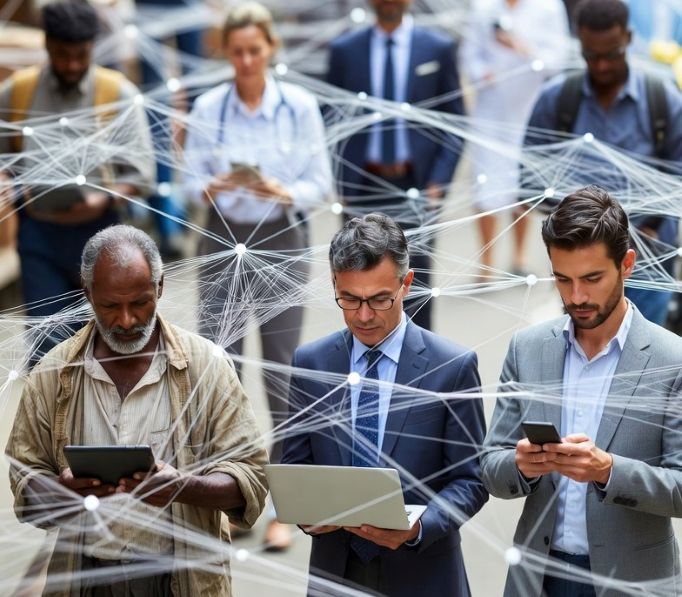
Coins once clinked in merchants’ hands as proof of a fair deal. A farmer might trade grain for tools, or a craftsman hand over silver for cloth. Value felt solid, something you could hold and count. Yet that tangible world has quietly slipped away, giving way to numbers on screens and flows of information that define wealth today.
The Roots of Tangible Value
Early humans relied on barter. Later, societies minted coins around 640 BCE in ancient China and Lydia. For a deeper look at this fascinating journey, see An Exploration of Money’s Past From Barter to Banknotes. Paper money appeared in China during the Yuan dynasty, making trade lighter and faster. Banks issued notes backed by gold or trust. For centuries, physical currency anchored economies.
People trusted what they could touch. But as global trade expanded, carrying heavy coins or guarded bills grew impractical. Digital systems emerged to solve the problem. Research from McKinsey shows cash now makes up only about 46 percent of worldwide payments, down from higher shares just a few years ago. Digital options have taken over more than half of transactions in many places.
Shifting to Interconnected Networks
This change runs deeper than convenience. Value tracking has moved from physical assets to interconnected data networks. In the second paragraph, experts at supply chain relationship intelligence highlight how relationships between suppliers, logistics partners, and buyers create patterns that reveal true economic strength. No longer does a single coin or note capture worth. Instead, streams of data from every link in production and delivery paint a fuller picture.
Every Transaction Tells a Story
Think about a simple purchase. Years ago, you paid cash at a store counter. The transaction ended there. Today, that same buy triggers updates across networks. Inventory drops, suppliers receive signals, payments clear in seconds through apps or cards. Data indicates that non-cash transaction volumes continue to surge, with projections showing cashless payments growing dramatically by 2030, especially in regions like Asia-Pacific. PwC analysis points to this rapid shift as consumers and businesses embrace instant, digital methods.
The Philosophical Side of Value
The philosophical side invites reflection. What is money, really? Once it was a trusted object with agreed value. Now it often exists as code; entries in databases or entries on distributed ledgers. Bitcoin arrived in 2009 as a bold experiment, showing that value could live without central banks or physical form. Central banks in over 130 economies now explore their own digital currencies. Yet the bigger transformation lies in how entire systems connect. Supply chains generate mountains of information about origins, movements, quality, and timing. This intelligence turns raw data into actionable insights that influence pricing, risk, and opportunity.
From Bean to Cup: A Connected Journey
Imagine coffee on your table. Its journey involves farmers, processors, shippers, roasters, and retailers. Sensors and shared records track temperature, location, and compliance at every step. Blockchain and IoT tools make this possible, creating transparent histories that build trust. Experts note that such visibility reduces fraud and errors while speeding decisions. A disruption in one link ripples through the network instantly, allowing quicker responses than old paper-based methods ever could. McKinsey reports that supply chain disruptions cost businesses significantly, pushing companies toward smarter, data-rich approaches.
Challenges and Human Rewards
This evolution carries subtle challenges. Trust shifts from physical security, like locked vaults or armed guards, to digital safeguards like encryption and verification. Privacy questions arise when so much personal and business data flows openly. Yet the rewards feel meaningful. Small producers in remote areas gain fairer deals when buyers see the full story behind goods. Consumers choose products with confidence about ethics and quality. Economies become more resilient as information flows replace blind spots.
Redefining Worth Through Connections
Philosophers might ask whether value has grown more abstract or simply more honest. In the past, a gold coin hid the labor and resources behind it. Today’s networks reveal connections. Relationship intelligence across supply ecosystems shows how collaboration creates worth beyond any single transaction. Terms like network value mapping or relational data analytics capture this idea without overcomplicating it. They point to systems where every participant contributes to a living web of information.
Looking Ahead With Care
Looking ahead, the story continues. Digital wallets serve billions, and instant payments feel normal in many countries. Cross-border flows reach trillions, powered by real-time rails. Still, physical cash lingers for those who need it; older generations, certain communities, or moments when screens fail. The blend feels human. We keep what works while embracing what connects us better.
In the end, the move from coins and notes to data-driven value systems reminds us that money has always been a social agreement. It reflects how we organize trust and exchange. As supply chain visibility and relationship analytics grow stronger, value becomes less about holding something and more about understanding flows. This interconnected intelligence promises fairer, faster, and more transparent economies. We stand at a point where technology meets human need in new ways, turning abstract data into real opportunity for everyone involved.
The journey from clinking metal to glowing screens shows progress, but it also invites care. How we shape these networks will decide whether value serves broad prosperity or narrow interests. With thoughtful design, the future holds systems that honor both efficiency and human connection.